

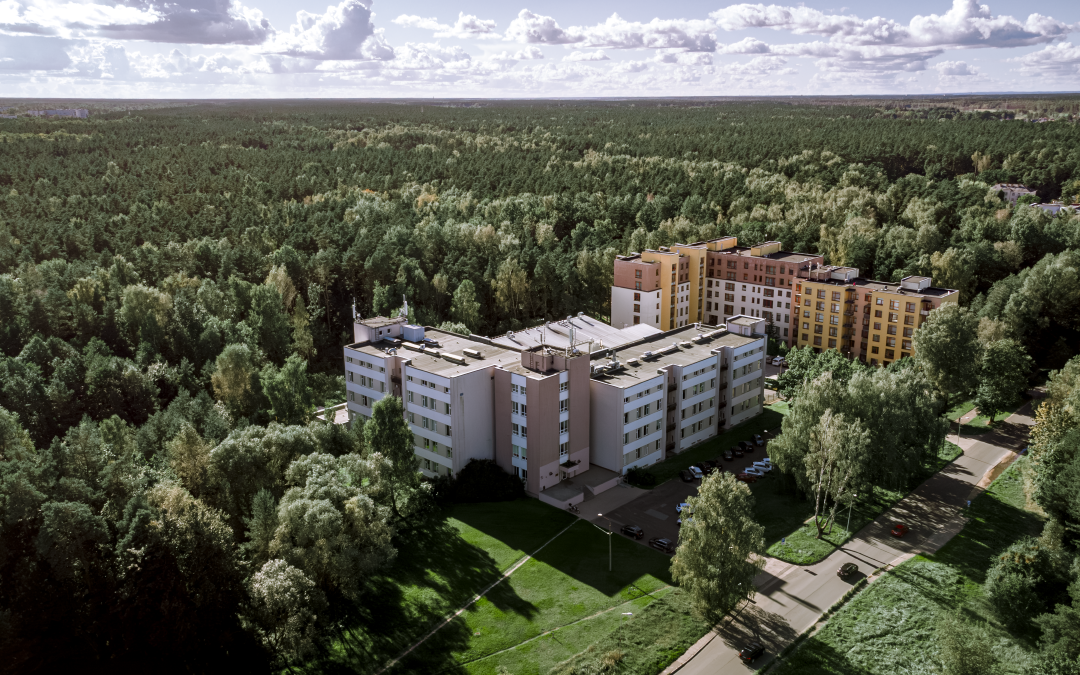
The Latvian Biomedical Research and Study Centre (BMC) is a place where modern science is transformed into solutions that impact the health, safety, and quality of life of each of us. Here, scientists study humans, diseases, and the environment at the deepest possible level—from molecules to society as a whole. The Centre’s work is based on three closely interconnected research areas: genome research and biobanks, biotechnology and vaccine development, and environmental and ecosystem research.
In close cooperation with the University of Latvia and other higher education institutions, significant work is also carried out in the field of education. Highly qualified academic staff, a supportive research environment, and world-class scientific infrastructure provide broad opportunities for educating both Latvian and international students and doctoral candidates. Importantly, our researchers not only actively participate in the study process but also help create an educational environment where young specialists can acquire practical research skills alongside theoretical knowledge.
A clear example of this approach is the new subprogramme “Biomedicine” within the Bachelor’s study programme “Biology”, which was launched in the 2025/2026 academic year. Its establishment is the result of the initiative and dedicated work of BMC researchers, contributing to the development of modern and internationally competitive biomedical education in Latvia.
At the same time, BMC is currently on the threshold of significant changes. As early as 31 May of this year, the Latvian Biomedical Research and Study Centre (BMC) will merge with the Latvian Institute of Organic Synthesis (OSI) to establish the National Research and Innovation Institute (NIRI). The new institute will conduct interdisciplinary research in the development of new medicines, diagnostics, and treatment methods, with a shared overarching goal – to create science-based solutions that help people live healthier and longer lives.
The merger process has been underway since 2024, and is being implemented with the support of the project No 5.2.1.1.i.0/2/24/I/CFLA/001 “Consolidation of the Latvian Institute of Organic Synthesis and the Latvian Biomedical Research and Study Centre” was launched. Within the framework of this project, the gradual harmonisation of OSI and BMC activities and processes, as well as the integration of human resources, is planned in order to establish NIRI by 31 May 2026. During the consolidation process, structural changes are planned to enhance the quality of higher education and research, increase the efficiency and shared use of resources, and strengthen international scientific competitiveness by combining the capacities of OSI and BMC.
On 14 October 2025, the Cabinet of Ministers adopted a historic decision approving the establishment of the National Research and Innovation Institute (NIRI). We are currently in the most active phase of the consolidation process, as the activities of both institutes are being synchronised so that they can operate as a single, integrated institution in the future.
Facts about BMC
At the Latvian Biomedical Research and Study Centre (BMC), the following staff are employed (data as of 28 February 2026):
- 157 employees, including,
- 55 PhD holders;
- 42 employees with a Master’s degree, of whom 22 are doctoral students or candidates for a doctoral degree;
- 19 employees provide administrative support.
- From 2020 to 2025, BMC researchers have published 433 publications (according to Scopus data), of which 379 were Open Access
- The institute’s Field-Weighted Citation Impact (FWCI) is 2,49.
Laboratories and Research Infrastructure
The structure of the Latvian Biomedical Research and Study Centre (BMC) includes 12 research groups, 5 infrastructure service centres, and 5 administrative departments. The research groups are independent in selecting their research topics and attracting funding. Therefore, the development of new BMC research directions is based on research excellence and the personal initiative of researchers.
Research groups are organised into three main research directions:
The Strategic Research Direction of Molecular Medicine represents BMC’s comprehensive and integrative approach to translational medicine. It brings together advanced genetic, molecular, and technological methods to understand disease development, create new therapies, and promote healthy lifestyles.
The Latvian Biomedical Research and Study Centre is home to one of the largest biobanks in Europe and the largest gene sequencing laboratory in Latvia. Tens of thousands of human biological samples are stored and analysed here, which, together with health and lifestyle data, form a unique foundation for modern genome research.
This infrastructure has enabled the development of the Latvian Genome Reference System—a detailed reference framework describing the genetic characteristics of the Latvian population. It is not merely a database intended for scientists. This system represents an important step towards personalised medicine—treatment based on each individual’s unique genetic code.
The Strategic Research Direction of Biotechnology and Structural Biology focuses on combining fundamental and applied science to generate new knowledge and develop innovative technologies and products used across various sectors, including medicine, pharmaceuticals, agriculture, biology, physics, and others. This knowledge enables the use of nature’s own mechanisms for the benefit of humanity.
Similarly, to leading biotechnology centres worldwide that have developed modern vaccines and targeted therapies, research here applies viral particles, protein structures, and principles of cell biology to design next-generation therapeutic approaches.
At the same time, research in structural biology and molecular pharmacology is carried out to analyse how drug molecules interact with cellular receptors and enzymes. This allows researchers to identify the most effective and safest drug candidates already at early stages of development, reducing risks and accelerating the path toward clinical application. Such an approach aligns with the modern paradigm of precision medicine, where therapies are designed with maximum specificity and minimal side effects.
Here, biotechnology is not merely a technology. It is the ability to understand the logic of living systems and use that knowledge to protect human health—both today and in the future.
The Research Direction of Molecular Ecology and Biosystems reflects BMC’s approach to addressing interconnected challenges in public health, the environment, and agriculture through the One Health framework.
Within this research direction, particular attention is devoted to environmental monitoring in order to identify the pathways of pathogen transmission and the spread of antimicrobial resistance, as well as to understand their dynamics. Research also focuses on the molecular investigation of interactions between organisms and their environment.
Studies conducted by BMC research groups contribute to the development of sustainable agricultural technologies, the implementation of disease control measures, and the monitoring and improvement of environmental quality. In this way, the research positively impacts public health, helps reduce the burden on healthcare systems, and promotes the development of new environmental technologies within the bioeconomy.
Access to BMC’s high-level research infrastructure is provided through service centres, whose role is to manage infrastructure facilities, ensure their accessibility, and develop a range of scientific services.
Genome Centre. The Genome Centre provides services and consultations related to genetic research for both local and international clients across various fields connected with molecular biology, biotechnology, and healthcare. It offers a collaborative environment that plays an important role in implementing competitive and interdisciplinary research in the natural sciences.
Historically, the Genome Centre was established in 2005 with the aim of supporting and promoting human genome research in Latvia. Over the years, the highly qualified staff of the Genome Centre and the advanced technologies under its management have enabled numerous successful collaborations at both national and international levels (including the Latvian Childhood Cancer Initiative and the 1+ Million Genomes Initiative).
The Genome Centre is also responsible for implementing the State Population Genome Database project, which currently contains genetic samples from 40,000 residents of Latvia.
The Laboratory Animal Service Centre was designed and developed in collaboration with international experts, following requirements that meet global standards for experimental work with laboratory animals. These laboratory facilities began operating in mid-2016 and currently provide researchers with the opportunity to develop their scientific ideas using in vivo models.
The Laboratory Animal Service Centre primarily consists of 180 m² of special cleanroom facilities that are free of rodent-specific pathogens (SPF – specific pathogen free). The cleanroom area includes several functionally distinct and separated facility units: a quarantine area, dedicated rooms for housing mice and rats, procedure and surgery rooms, facilities for work with immunodeficient and transgenic mice, as well as biosafety level 3 (BSL-3) laboratories for research involving infectious disease models. Within the SPF cleanrooms, rodents are housed in individually ventilated cages (IVC). Outside the SPF area, there are laboratory spaces for experimental work with animals that are housed in open cages.
Cell Culture and Microscopy Service Centre. The use of human and animal cell cultures has become an integral part of biomedical and biotechnology research. The new Cell Biology Unit of the BMC Biomedical Technology Complex combines researchers’ expertise and experience with extensive technical capabilities to support the maintenance, characterization, and application of mammalian cell cultures in various assays, as well as the development of new cell culture lines.
The new facilities are designed in accordance with Biosafety Level 2 (BSL-2) requirements. Three biosafety cabinets are dedicated to cell culture work:
- one cabinet is intended for cell cultures obtained from ATCC, ECACC, or other cell banks (characterized and certified cell lines);
- the second cabinet is designated for work with clinical material to establish new cell lines;
- the third cabinet is used for work with virus-like particles and non-pathogenic viruses.
All cell culture workstations are equipped with automated cell counters (LunaFX8).
Recombinant Biotechnology Service Centre provides services related to the production of recombinant proteins for both researchers and companies within the framework of contract research projects.
The service centre is equipped with a versatile and modern range of equipment to support cultivation of bacterial and yeast cells, cell harvesting, biomass disruption, and protein purification, as well as process monitoring and product characterization.
The equipment infrastructure is also specifically adapted for the production and purification of virus-like particles (VLPs) as part of vaccine development processes.
The Bioinformatics Service Centre was established in 2018, following the introduction of high-throughput sequencing technologies into the everyday research activities at BMC. The centre was created with the aim of consolidating the expertise available among the institute’s researchers, fostering an environment for the exchange of ideas and experience, providing support to researchers in data analysis, developing a local infrastructure for data analysis and storage, and creating mechanisms for further dissemination of knowledge both within the institute and at the national level.
From its establishment until 2026, the Bioinformatics Service Centre has grown from an initial team of three enthusiasts in the field to 14 highly qualified specialists. Their combined expertise covers a wide range of areas, including whole-genome sequencing analysis, de novo genome reconstruction, microbial population structure analysis, population-scale genotyping data analysis, and many others, including the application of artificial intelligence models for gene function discovery.
To provide researchers with the necessary computational power and data storage capacity, the centre manages several high-performance computing (HPC) nodes and disk arrays. However, most large-scale computational tasks are carried out remotely in collaboration with various European high-performance computing centres.
BMC Priorities and Attracted Funding
The activities of the Latvian Biomedical Research and Study Centre (BMC) are largely supported by competitive research funding. In order to develop new diagnostic methods, treatment approaches, and biomedical technologies, our researchers actively participate in both national and international research project calls.
Funding structure at BMC (2020–2025):
- 37% – EU Structural Funds and Recovery and Resilience Facility (RRF) programmes;
- 24% – Fundamental and Applied Research Projects (FLPP) and National Research Programmes (VPP);
- 15% – Base funding from the Ministry of Education and Science;
- 14% – International research projects;
- 10% – Contract research and other institutional income.
These figures highlight an important fact – the majority of BMC’s funding is obtained through open competition, demonstrating the institute’s scientific excellence and international competitiveness.
The next step is to increase the volume of international research projects and contract research, further strengthening collaboration with partners across Europe and worldwide.