

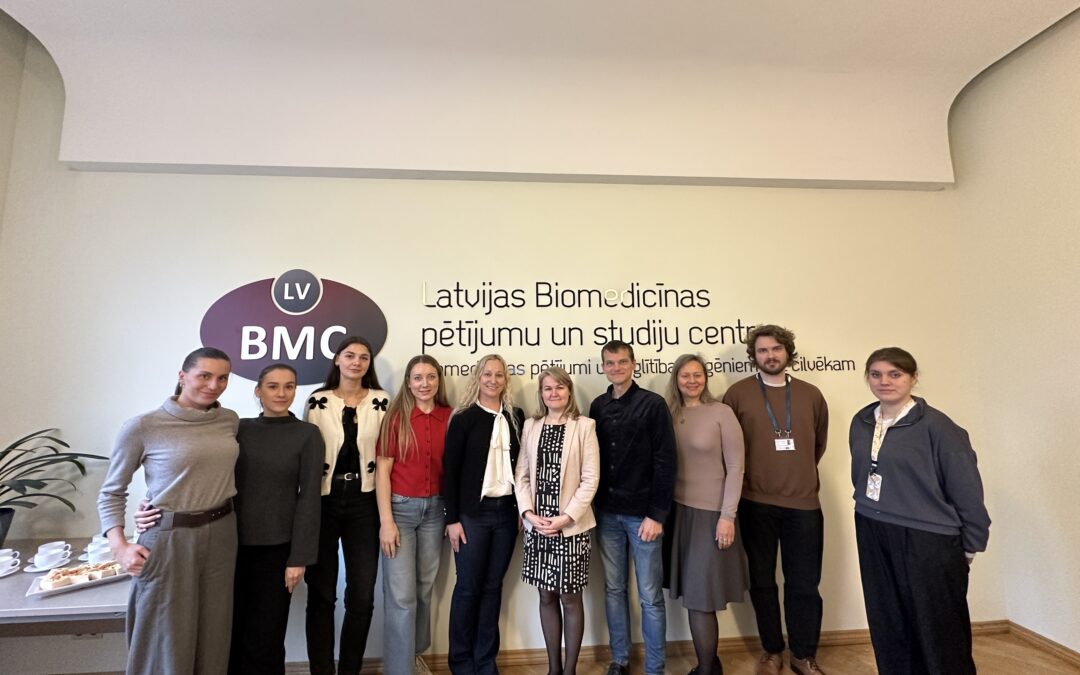
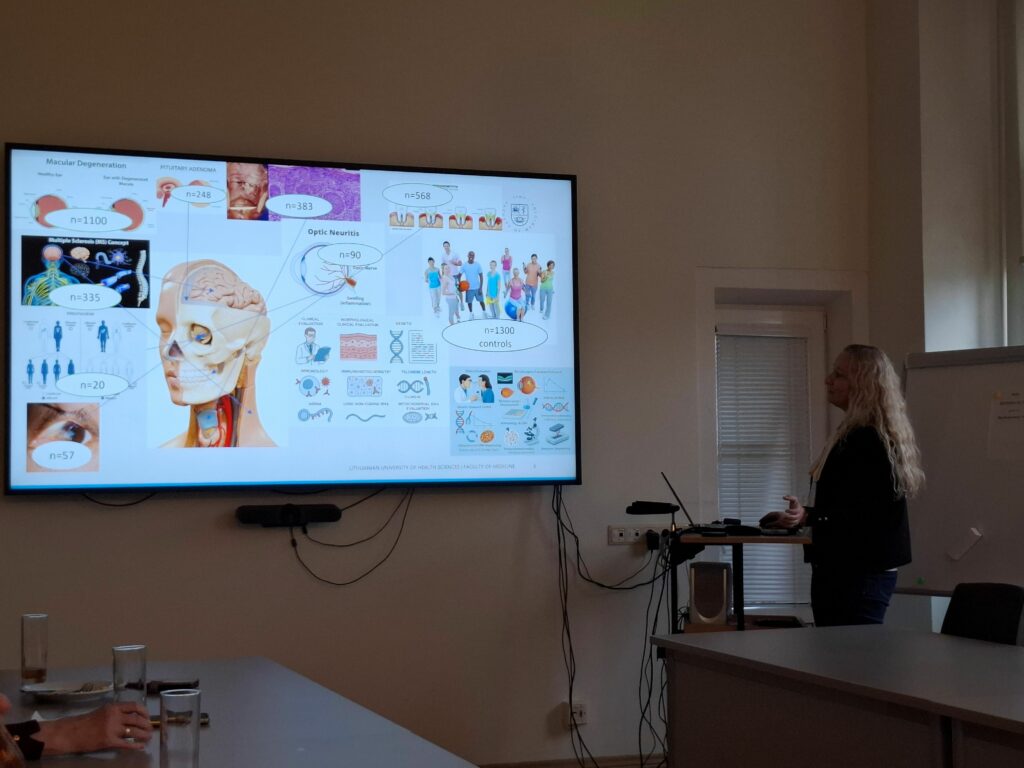
On December 2, BMC was visited by Prof. Rasa Liutkeviciene and representatives of her scientific group from the Lithuanian University of Health Sciences, Institute of Neurosciences. During the visit, a meeting was held with the scientific group led by Vitas Rovīte and the latest results obtained within the framework of the joint Latvian-Lithuanian-Taiwanese project ” Role of ryanodine receptors in neuroendocrine tumour development: implications in electrophysiological and molecular tumorigenesis mechanisms”, as well as future cooperation, were discussed.
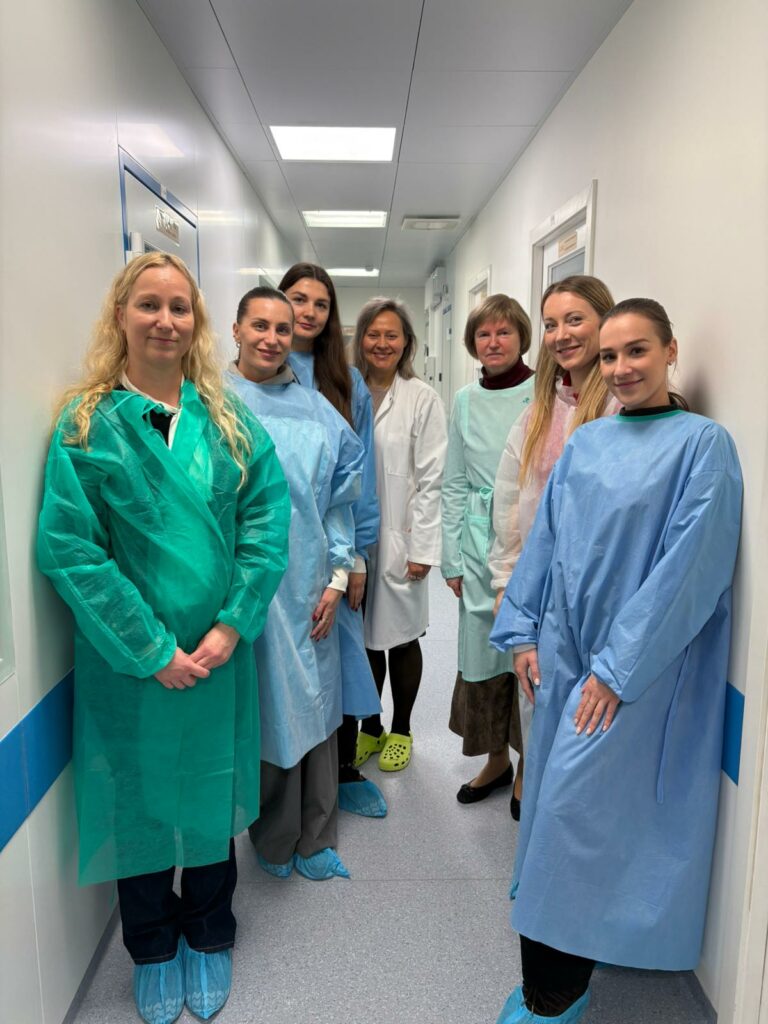
The guests went on a tour of the Mammalian Cell Laboratories, the Genome Center and visited the biobank.
About project: Pituitary neuroendocrine tumours (PitNETs) are benign tumour that form in the pituitary gland and have a major negative impact on the patients’ health because of hormone overproduction or mass effects. Biophysical properties of neuroendocrine cells have an elaborate intrinsic role in the regulation of these cells, as their functionality are directly linked to ion channel signalling – major controller of hormonal release and cell inner regulatory circuits. In our previous genomic and transcriptomic studies, we have discovered that ryanodine receptors (RYRs) are one of molecular determinants of pituitary tumour development and functionality, however, the exact role of these intracellular calcium channels in neuroendocrine cell biology and pituitary tumour pathogenesis is not clear. The objective of the project is to investigate the role of RYRs in endocrine cell electrophysiological functionality and neuroendocrine tumour development.