

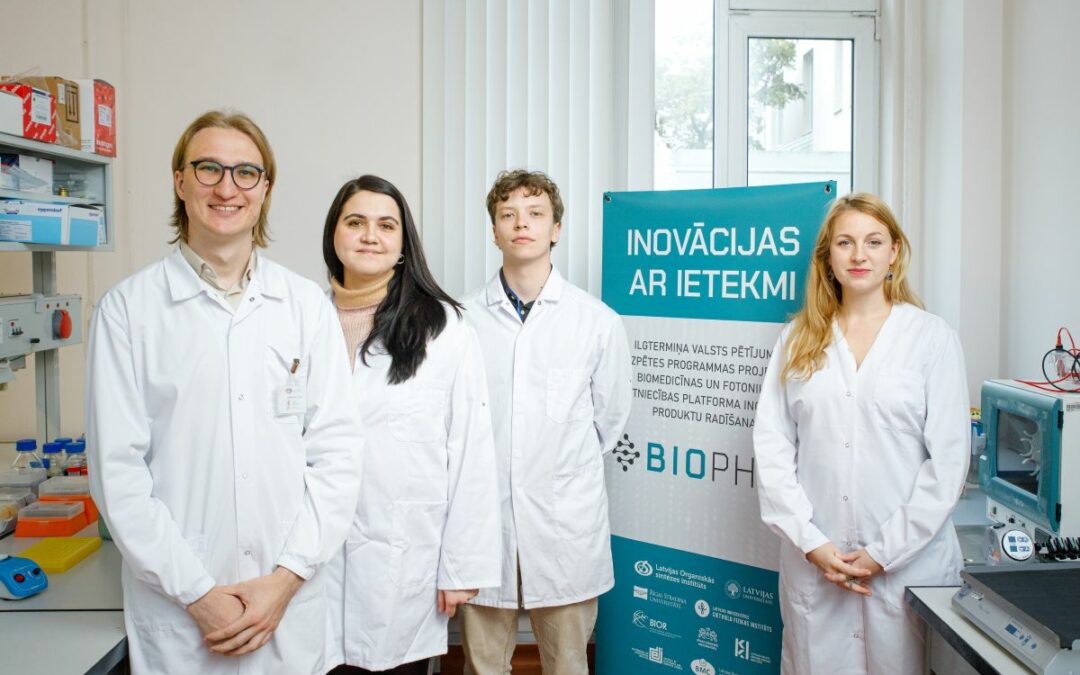
One of the key challenges in regenerative medicine today is the safe, scalable, and cost-effective production of extracellular vesicles (EVs). EVs are small, naturally released biological particles that play a crucial role in cell-to-cell communication and are widely studied for their potential in tissue regeneration, immune modulation, and the treatment of chronic diseases.
However, current EV production methods remain time-consuming, expensive, and often compromise EV quality, limiting their clinical application.
The EVBoost project addresses this challenge head-on.
EVBoost is developing an add-on module for hollow-fiber bioreactor systems, already widely used for stem cell cultivation. By applying electromagnetic stimulation, the module encourages stem cells to release significantly higher amounts of EVs—without harming the cells or reducing the therapeutic potential of the vesicles. Early results suggest a non-invasive and scalable solution that could dramatically increase EV yield for clinical use.
Beyond technology: advancing scientific understanding
EVBoost also deepens fundamental knowledge by applying advanced multi-omics approaches, integrating proteomics and transcriptomics to study how electromagnetic stimulation affects cells and the EVs they produce. This work will help identify the underlying molecular pathways and may enable future customization of EV production for specific therapeutic needs.
EVBoost is not just about increasing EV yield—it’s about building sustainable innovation at the intersection of science, technology, and people.

BioPhoT is implemented within the long-term national research program “Innovation Fund – Long-term Research Program” funded by the Ministry of Economics. Platform number: IVPP-EM-Innovation-2024/1-0002.
We offer you to watch a video in which researcher Antons Miščenko talks about the project.